A ban on cosmetic animal testing
New Zealand is a country which is seen as beautifully natural and flourishing with animal life. However, after first glance there is a dark side for many of the species living here. This country to its discredit, like many others, allows animals to be tested for cosmetic purposes. Unfortunately this is one issue of many falling under animal ethics in New Zealand and throughout the world. The list is too large to cover in this blog entry, so the focus of this writing, will be aimed solely on the cosmetic practice for testing products/chemicals on animals. One must be aware that the medical use for animal testing is not argued in this blog.
Cosmetic testing on animals is a business not thrust under the light of public scrutiny but practiced behind the closed doors of laboratories. There are a range of experiments used on animals to gain safer cosmetic products placed in the market. The Draize test and the LD50 test are a small example of experiments that are performed on animals today.
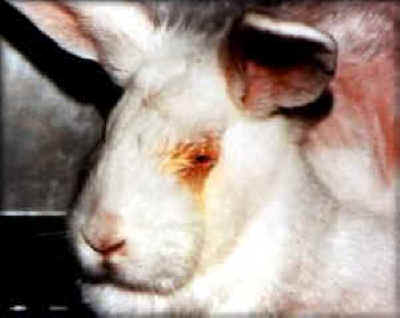
The Draize test is a prime example of an (animal) unethical experiment. Developed by John Draize, this test is performed mainly on rabbits, due to their large eyes and docile nature. A rabbit placed on a table with its head clamped (head is locked in an accessible position) and then a chemical is squirted on one eye. This process is to see whether the chemical used has an adverse reaction. The rabbit can be left with this chemical in its eye for around 14 days. Rabbits also make perfect candidates for this test as they do not produce tears to dilute the chemical.
One of the main problems with this test, outside the fact that it is cruel, creates pain and suffering for the animal, is the relevance of the chemical reaction. The rabbit eye, which has been experimented on, might produce completely different results to the same procedure being done on a human eye.
As mentioned there are a number of tests used for cosmetic products and the last that will be looked at is the LD50 acute toxicity test. Similar to the Draize test, the LD50 acute toxicity test is used to assess what dangers from a chemical or substance, over a prolonged time could have on human beings. The animals usually selected for this test are mice or rats. The animals are usually given a chemical orally and each control group is given different dosages. The animals are then observed, this is to gauge what affects different levels of the chemical have on the subject. The dosages are continually given until a certain number of subjects are deceased. However, one death is not a viable statistic, as Prof, E. Walum states,
“The LD50 value, defined as the statistically derived dose that, when administered in an acute toxicity test, is expected to cause death in 50% of the treated animals in a given period…”
Again the LD50 test falls under the same scrutiny as the Draize test. The lack of relation between human physiology and mice/rat physiology, also their comparability in toxic sensitivity, is a large hole in the tests design. Yet it is still used in experiments preformed today.
For an individual to be saved from a horrible disease, by a drug which has been tested on an animal, is harder to argue. However, the pain and suffering an animal has to go through so human vanity can be sustained is unjustifiable. Many countries throughout the world are ahead of New Zealand in this regard. Countries throughout the EU, as of March 26th 2013, have banned all sales on products developed by being tested on animals. The United Kingdom has also followed the example set by the EU.
Animal testing (caution can be disturbing viewing.)
There are still countries, like New Zealand, which demand cosmetic companies wanting to sell throughout its boarders, that all products must be tested and regulated by animal experimentation. One good example is China. With a large market and increased sales of cosmetics, it is hard to see any of the larger more well-known brands pushing out of China.
New Zealand, China and other counties that still allow cosmetic testing on animals should be focused on the study of alternate methods. They exist and are used throughout EU, Japan, Australia and many more. There is new research in growing human skin cells and fully replicating skin for skin irritation tests. For acutely toxic chemicals there is computer screening techniques know as (Q)SARS. Though they may not be able to scan all available chemicals they would reduce the need for animal tests considerably, effectively lowering numbers of animals needed to be used. This should be the minimum goal all countries that still continue old testing methods. There have been large advancements in vitro and in silico tests, (in vitro meaning in glass) and (in silico meaning performed on a computer.) Techniques are still in need of finalization but the need for complete disuse of animal experimentation is vital.
Alternative non-animal testing methods.
As previously mentioned well-known cosmetic companies that still cling to animal testing are being sold in New Zealand, brands such as Avon products, 3M, Gillette, L’Oreal, Herbal Essences and many others. The best way to help cripple the cruel side of the beauty industry, is to lower their profit margins, this is done simply by not purchasing their products. Organisations such as PETA give lists on companies regarding cosmetics companies and their values on animal ethics. Also any product with the logo of The Leaping Bunny on it is ethically sound.
There is a list from PETA, which displays companies that do not test their products on animals and these companies continue to prove the change in the industry is possible. PETA has another list of companies that do test their products on animals and unfortunately many of the names will be familiar.
For animals to be treated fairly and for what is an urgent issue that needs to be resolved, the scientific community needs to stand behind animal ethics. They are the ones who will dicover new and life saving alternate methods. They are the people who are in the position of power. They are the people that are able to treat or mistreat these animals.

I couldn't agree more with your argument. I especially think you make a strong and logical point regarding the lack of relation between human physiology and animal physiology. Surely the differences between species makes any test results inaccurate, redundant and therefore pointless. A Fascinating Read.
ReplyDeleteI strongly agree with your argument Aaron. I like the reference to New Zealands "clean green" image in the introduction as we do pride ourselves on our natural enviroment and animals yet we can still do this to some. I also had no idea about the leaping bunny logo, will definately look for it now when I buy cosmetics.
ReplyDeleteI feel the same way with you Aaron. It is unfair for those poor bunnies. As the alternate methods you mentioned, New Zealand and China should really start using them instead of bunnies. If people could know more before they purchase cosmetics, there would be less poor bunnies.Labels is very necessary for those cosmetic that under animal tested.
ReplyDelete